Food
Cooked Potato Line Optimization
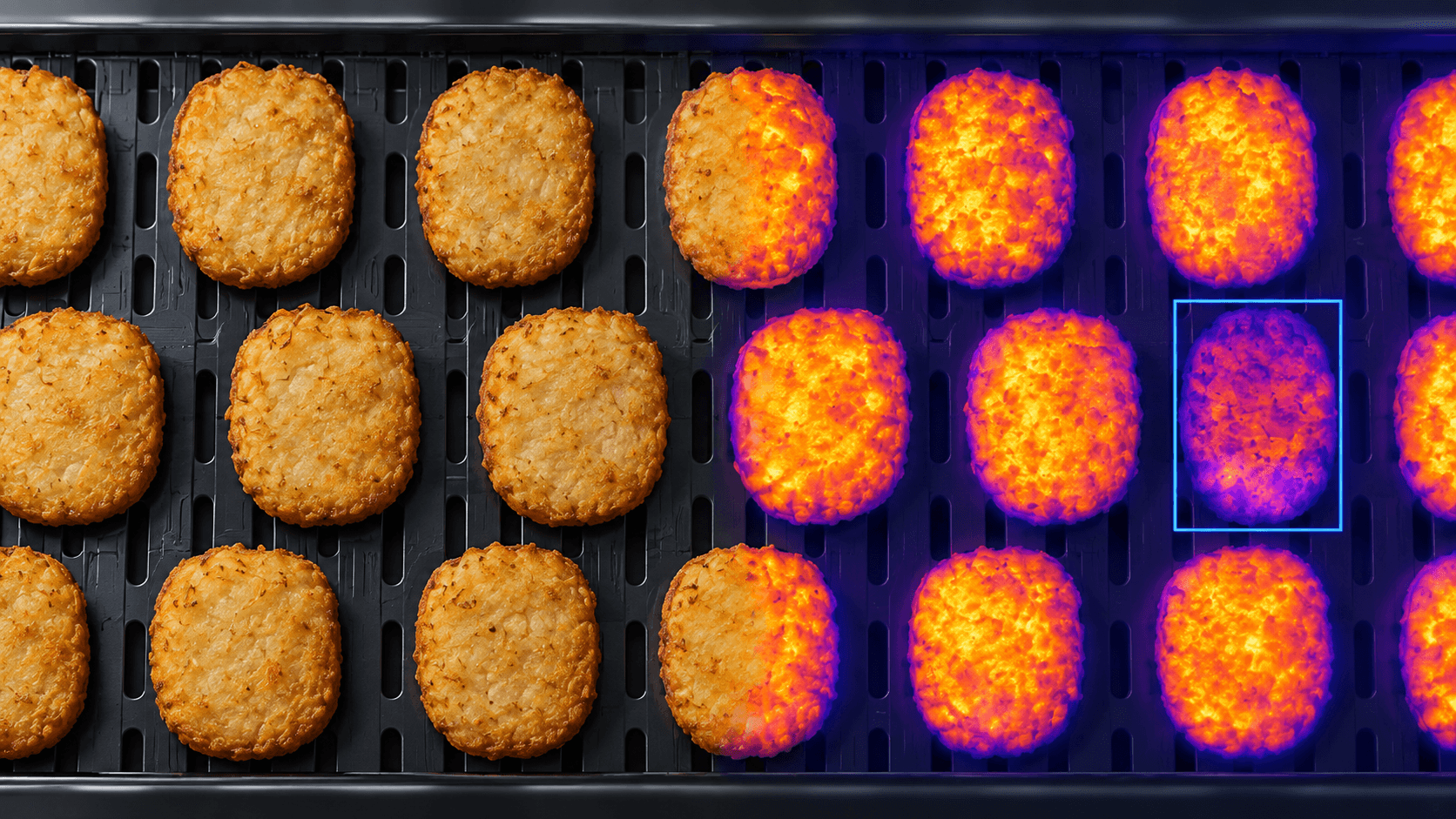
Real-time thermal insight to optimize line speed, reduce unnecessary cook and freeze time, and guide smarter QC sampling for cooked potato products.
Find more capacity on your cook and freeze lines
For hash browns, potato patties, tots, and wedges, every extra second on the line adds up. Conservative cook and freeze settings can protect against changing conditions, but they can also limit throughput and use more energy than the process needs.
Thermal Intelligence by Eigen gives your team a continuous view of product surface temperatures. See variation across the belt, detect drift between routine checks, and use that information alongside validated probe measurements to make better decisions about line speed and process settings.
What Thermal Intelligence helps you optimize
Line speed based on actual product conditions
See how product surface temperatures change as belt speed, loading, and process conditions shift. Identify opportunities to increase throughput while keeping the product within spec.
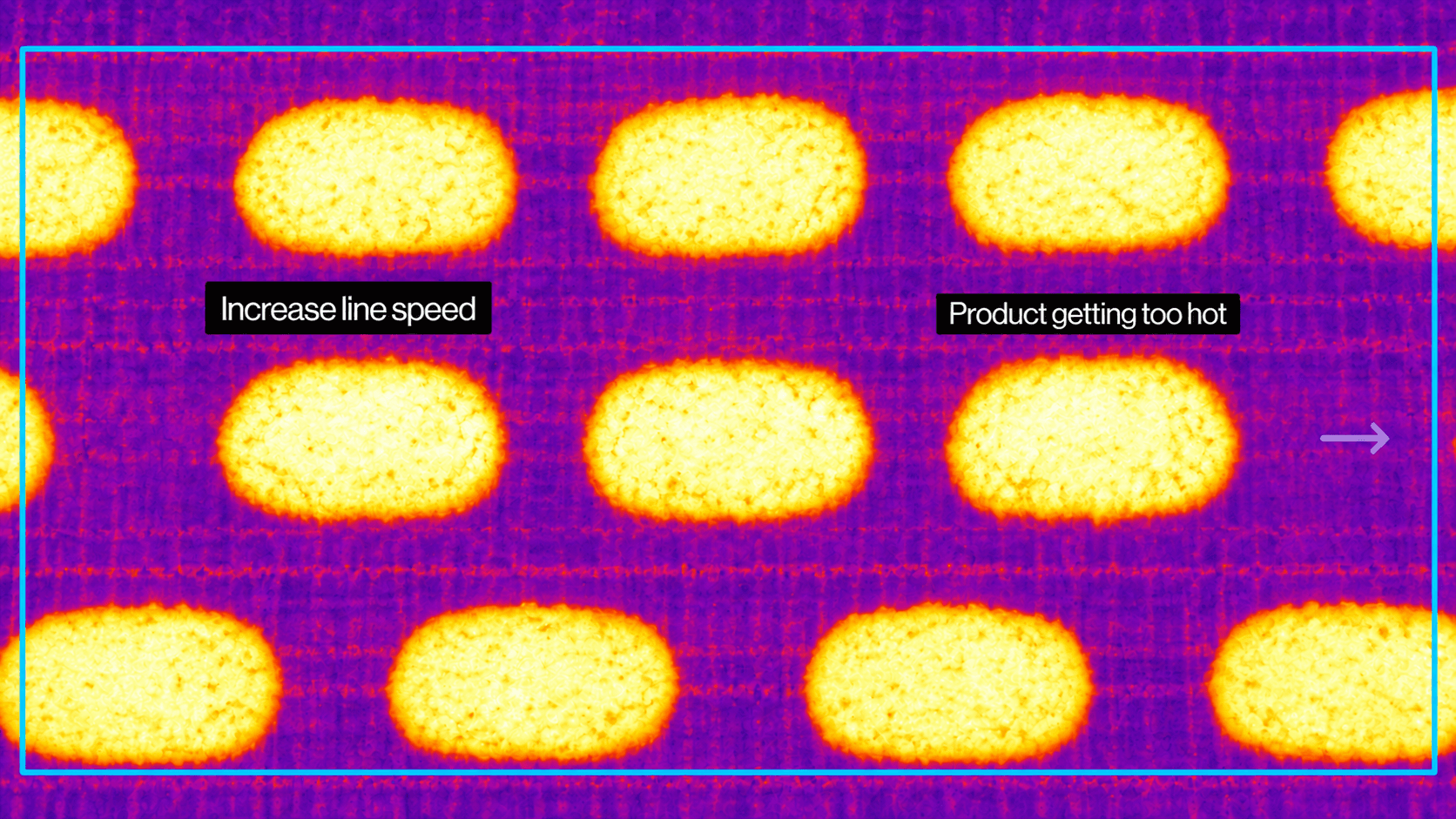
Product getting too hot across the line prompts an increase in line speed within validated operating limits.
Cook and freeze time
Find where extra dwell time is adding heat or cooling beyond what your product requires. Use thermal trends and targeted checks to evaluate shorter cook and freeze times, reduce unnecessary energy use, and maintain consistent product quality.
Smarter sampling between routine checks
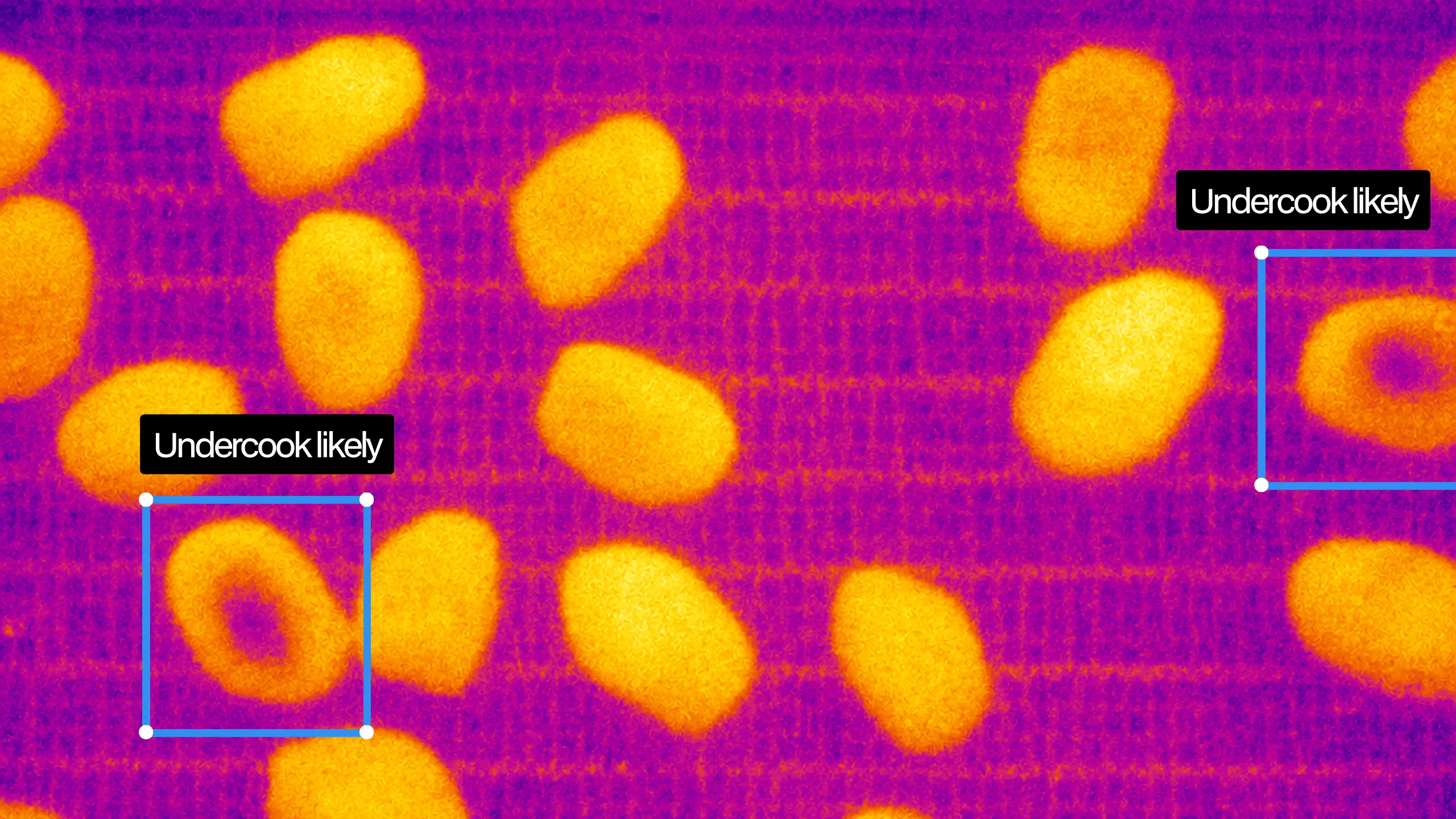
As opposed to probes, which sample a fraction of your production, continuous thermal monitoring samples 100% of your line. Highlight unusual surface-temperature patterns and direct operators to products that warrant a probe check, so sampling responds to what is happening on the line.
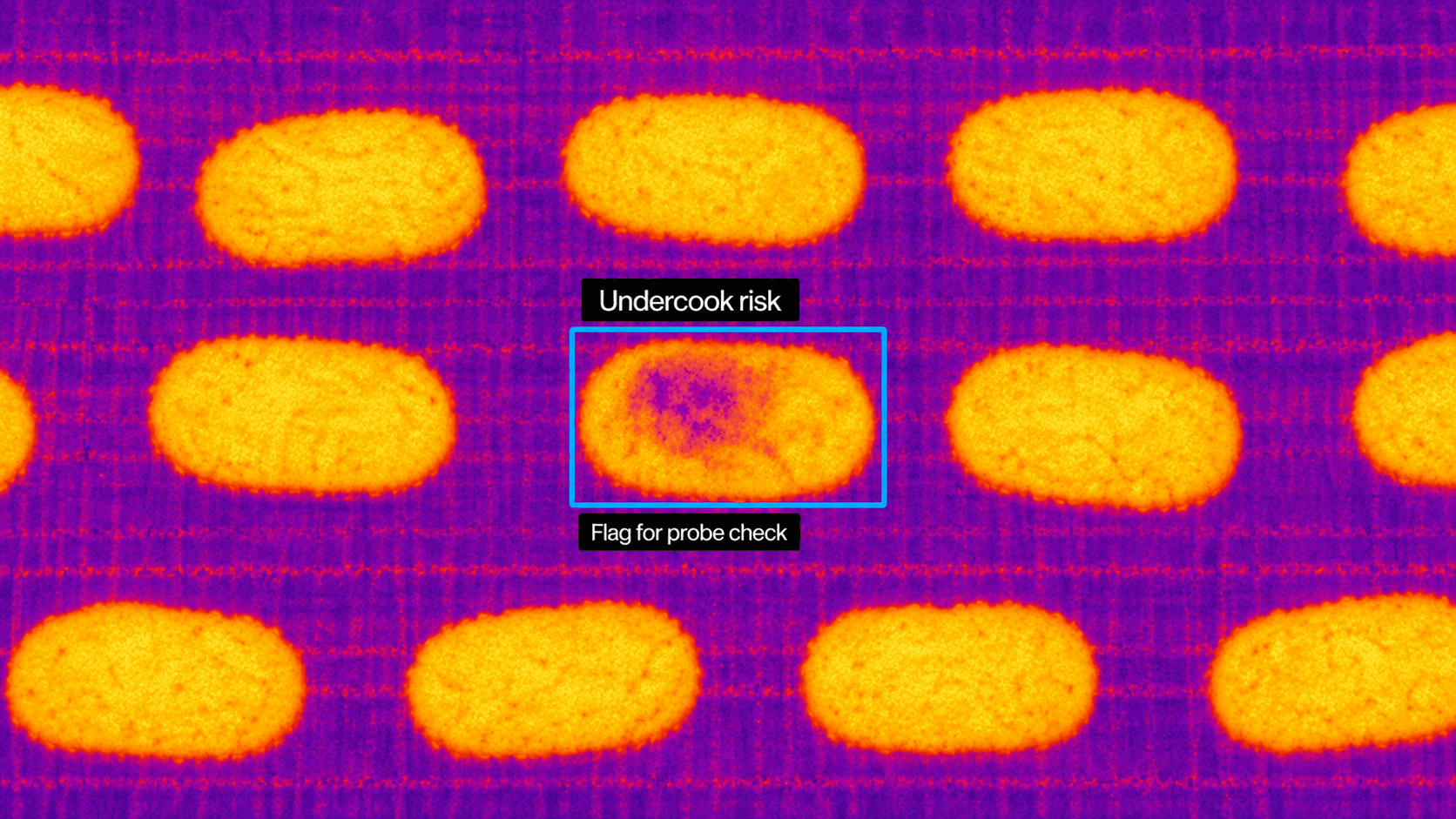
A cooler surface pattern directs QC to a targeted probe check.
Consistency across the belt
Track surface-temperature variation from one side of the conveyor to the other. Spot patterns that warrant investigation, such as uneven heating or cooling, changes in product loading, or drift after a changeover. Give operators a clearer view of the process while production is running.
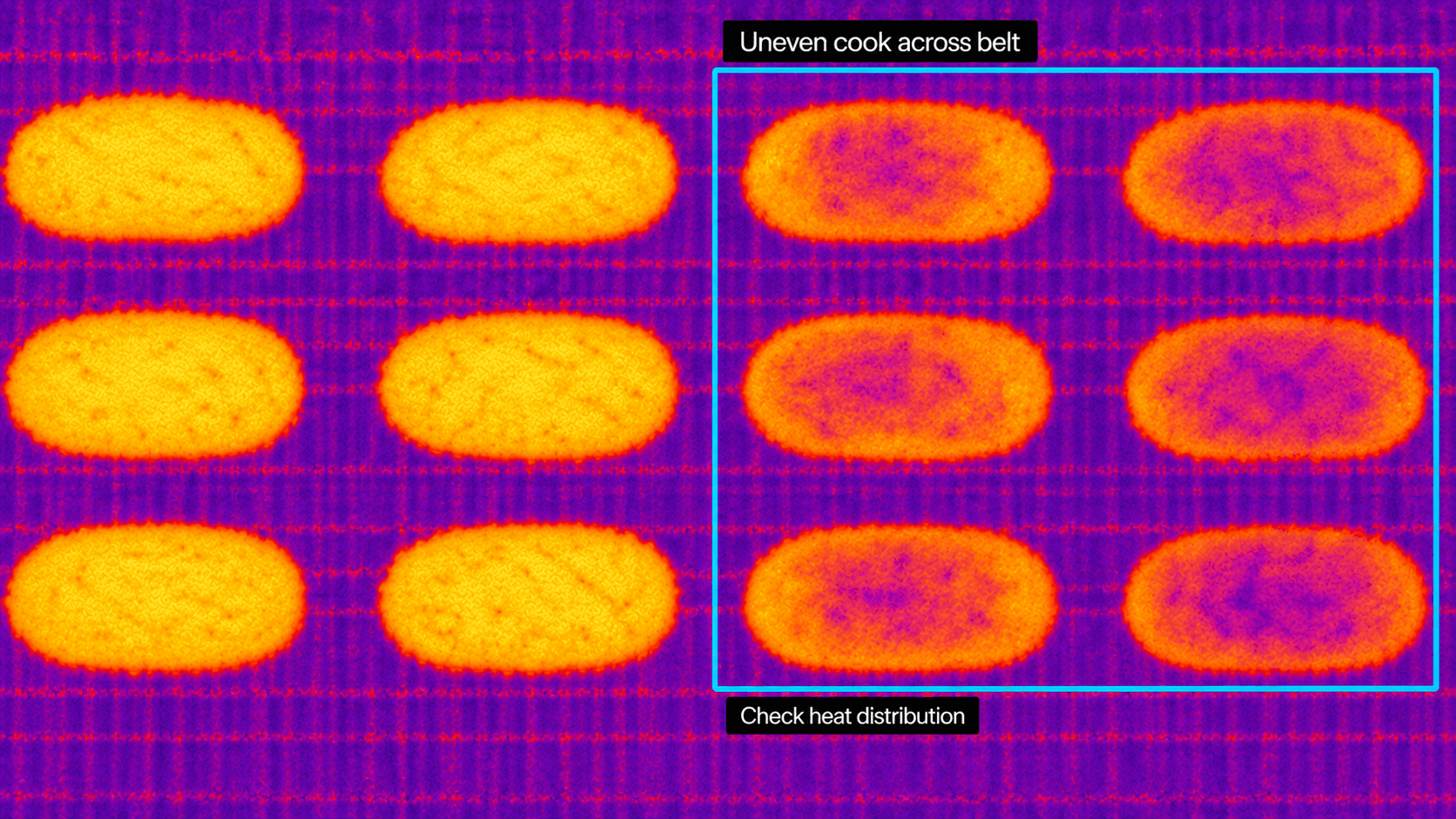
Variation across the belt helps operators investigate uneven heat distribution.
System ROI
Increased yield
Prevent unnecessary moisture loss from overprocessing to retain more saleable product weight. Optimize cook and freeze times to support faster line speeds within validated operating limits, increasing output from your existing equipment.
Reduced quality losses
Catch faulty batches within minutes of a detectable thermal deviation. Use inspection data to identify the affected production window and isolate the relevant product, helping contain scrap and rework before losses spread.
Reduced risk of recalls
Monitor surface-temperature patterns across 100% of product instead of relying on probes of only a fraction. Continuous coverage helps reveal deviations between routine checks so teams can investigate and contain affected product before it ships. Thermal monitoring complements validated probe checks and product-release procedures.
Integration
The camera is typically mounted above the line or to the side depending on steam, oil, and the conditions at your line.
An Eigen OneView edge device processes every image on-device and drives an operator HMI that shows the result for the last product inspected, with results and images streaming to OneView Cloud for tracking, trending, and review.
See where your potato line has room to improve
Talk to Eigen about your product, cook and freeze stages, current belt speed, and sampling routine. We’ll help identify where thermal monitoring can support throughput, shorter dwell times, and more targeted QC checks.
Find more capacity on your cook and freeze lines
For hash browns, potato patties, tots, and wedges, every extra second on the line adds up. Conservative cook and freeze settings can protect against changing conditions, but they can also limit throughput and use more energy than the process needs.
Thermal Intelligence by Eigen gives your team a continuous view of product surface temperatures. See variation across the belt, detect drift between routine checks, and use that information alongside validated probe measurements to make better decisions about line speed and process settings.
What Thermal Intelligence helps you optimize
Line speed based on actual product conditions
See how product surface temperatures change as belt speed, loading, and process conditions shift. Identify opportunities to increase throughput while keeping the product within spec.
Product getting too hot across the line prompts an increase in line speed within validated operating limits.
Cook and freeze time
Find where extra dwell time is adding heat or cooling beyond what your product requires. Use thermal trends and targeted checks to evaluate shorter cook and freeze times, reduce unnecessary energy use, and maintain consistent product quality.
Smarter sampling between routine checks
As opposed to probes, which sample a fraction of your production, continuous thermal monitoring samples 100% of your line. Highlight unusual surface-temperature patterns and direct operators to products that warrant a probe check, so sampling responds to what is happening on the line.
A cooler surface pattern directs QC to a targeted probe check.
Consistency across the belt
Track surface-temperature variation from one side of the conveyor to the other. Spot patterns that warrant investigation, such as uneven heating or cooling, changes in product loading, or drift after a changeover. Give operators a clearer view of the process while production is running.
Variation across the belt helps operators investigate uneven heat distribution.
System ROI
Increased yield
Prevent unnecessary moisture loss from overprocessing to retain more saleable product weight. Optimize cook and freeze times to support faster line speeds within validated operating limits, increasing output from your existing equipment.
Reduced quality losses
Catch faulty batches within minutes of a detectable thermal deviation. Use inspection data to identify the affected production window and isolate the relevant product, helping contain scrap and rework before losses spread.
Reduced risk of recalls
Monitor surface-temperature patterns across 100% of product instead of relying on probes of only a fraction. Continuous coverage helps reveal deviations between routine checks so teams can investigate and contain affected product before it ships. Thermal monitoring complements validated probe checks and product-release procedures.
Integration
The camera is typically mounted above the line or to the side depending on steam, oil, and the conditions at your line.
An Eigen OneView edge device processes every image on-device and drives an operator HMI that shows the result for the last product inspected, with results and images streaming to OneView Cloud for tracking, trending, and review.
See where your potato line has room to improve
Talk to Eigen about your product, cook and freeze stages, current belt speed, and sampling routine. We’ll help identify where thermal monitoring can support throughput, shorter dwell times, and more targeted QC checks.
Read more
Previous

Solutions |
Food
Cracker Baking & Moisture Optimization
Next
Solutions |
Food
Oven + Freezer Line Optimization

Cooked Potato Line Optimization
Food
Real-time thermal insight to optimize line speed, reduce unnecessary cook and freeze time, and guide smarter QC sampling for cooked potato products.
Download
Sheet
Solution
Cooked Potato Line Optimization