Metals
Furnace Refractory Monitoring
Real-time thermal monitoring system that detects early refractory wear and heat leakage so teams can plan maintenance before safety risks, energy loss, or unplanned shutdowns occur.
Catch refractory wear before it shuts down your furnace
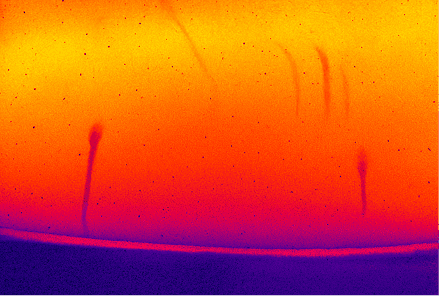
Eigen's AI Thermal Vision monitors the outside shell of furnaces, ladles, kilns, and smelters in real time using thermal cameras and AI trained on your specific assets.
Cameras cover the critical zones, an edge device processes the data on-site, and operators see live images, zone trends, and severity alarms.
Eigen's refractory monitoring pays for itself by:
Preventing breakouts, which can result in multi-million-dollar plant shutdowns
Extending the campaign length—often by months—by replacing refractory using data instead of a fixed interval or gut feeling
What the system detects
Hot spot formation
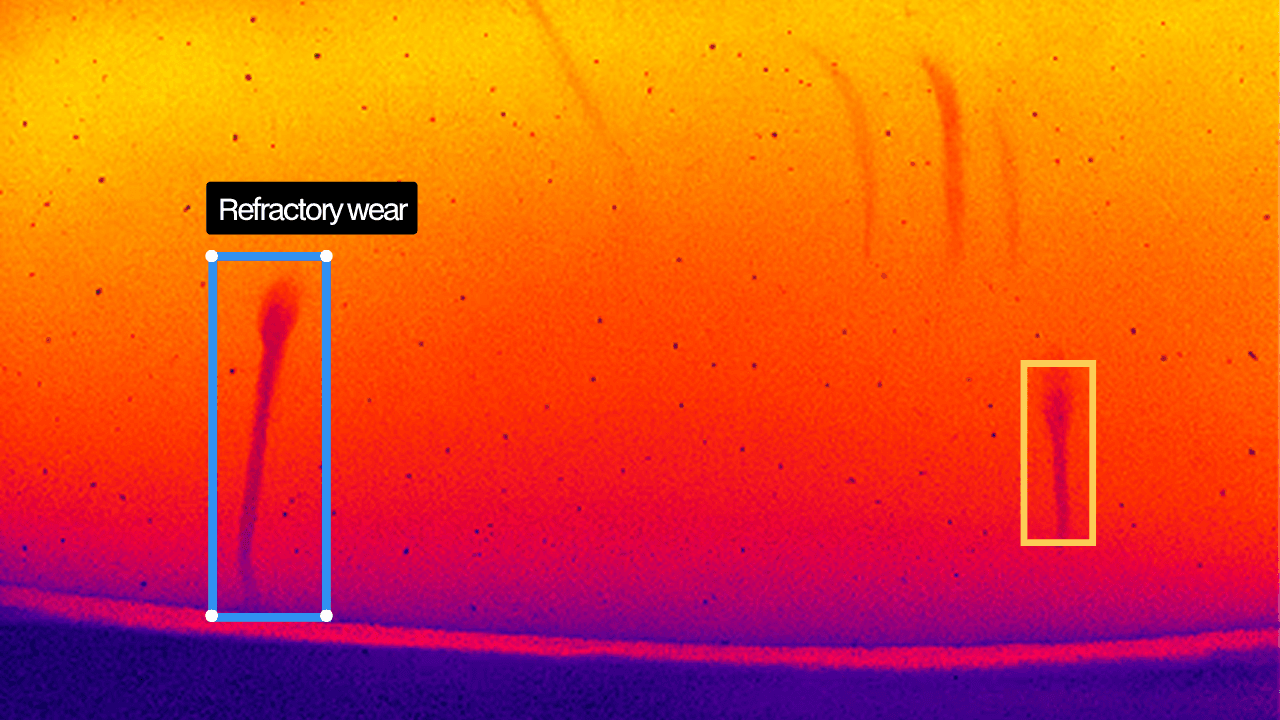
Localized temperature increases on the outside shell that indicate refractory thinning, cracks, or developing weak points. The AI flags pattern changes, not just absolute temperature, reducing false alerts.
Refractory thinning by zone
Thermal trends across each monitored region of the shell, so your team can see which sections are wearing fastest and plan maintenance around the actual condition of the lining.
Breakout risk indicators
Sustained or accelerating hot spot growth in critical zones, including water-cooled sections and furnace walls where blockages can drive metal beyond the refractory-lined zone.
Leak signatures
Thermal patterns consistent with gas or liquid leaks through the shell, often visible before they are detectable any other way.
System payback
Preventing a breakout event
A refractory failure or tap-wall breakout is the scenario that puts everything else on the page in perspective. Molten metal seeping through the shell is a safety event at worst and a multi-week downtime event at best.
Continuous shell monitoring catches the conditions that lead to breakouts early enough to act. Hot spots show up in the trend before they cross any absolute threshold, and accelerating change in critical zones flags as a high alarm to operations. Most plants only need to avoid one breakout for the system to pay for itself many times over.
Extending campaign length
The day-to-day return is on the maintenance side. If your team changes refractory at predetermined intervals, you are almost certainly replacing some lining before it needs to come out.
Eigen’s AI Thermal Vision gives engineering and maintenance a continuous record of how each zone of each furnace is wearing across the campaign. You can extend the interval when the data supports it, pull it forward when wear accelerates, validate refractory supplier performance over time, and build a maintenance schedule around what the lining is actually doing. Over multiple campaigns, the trend record becomes the basis for decisions on refractory specification, charge practices, and operating temperature.
Why AI thermal beats threshold-only monitoring
Traditional shell monitoring sets fixed temperature thresholds on defined regions and alarms when an average crosses the line. This works in theory but generates false positives from process noise and routine variation, which trains operators to ignore alarms.
Eigen's models look at how thermal patterns are changing, not just where they are right now. A region trending upward over hours or days is flagged before it crosses any absolute threshold, and the model learns the normal signature of a specific furnace so charge cycles and tap events are not treated as wear. The result is earlier detection of real thinning with fewer nuisance alarms.
How it integrates
Cameras are mounted on the periphery of the furnace, ladle, or kiln to cover the critical zones, with industrial cooling and protection enclosures rated for the environment, including hot, dusty, and hazardous areas.
Thermal data runs to an Eigen edge device where AI models process it in real time, with operators seeing live images and zone trends on an HMI and engineering teams accessing historical data and campaign-over-campaign comparisons in OneView Cloud.
Learn more about refractory monitoring with Thermal AI
Talk to our team about refractory monitoring for your furnace, ladle, kiln, or smelter, and see how camera placement, model training, and integration would work on your specific assets.
Catch refractory wear before it shuts down your furnace
Eigen's AI Thermal Vision monitors the outside shell of furnaces, ladles, kilns, and smelters in real time using thermal cameras and AI trained on your specific assets.
Cameras cover the critical zones, an edge device processes the data on-site, and operators see live images, zone trends, and severity alarms.
Eigen's refractory monitoring pays for itself by:
Preventing breakouts, which can result in multi-million-dollar plant shutdowns
Extending the campaign length—often by months—by replacing refractory using data instead of a fixed interval or gut feeling
What the system detects
Hot spot formation
Localized temperature increases on the outside shell that indicate refractory thinning, cracks, or developing weak points. The AI flags pattern changes, not just absolute temperature, reducing false alerts.
Refractory thinning by zone
Thermal trends across each monitored region of the shell, so your team can see which sections are wearing fastest and plan maintenance around the actual condition of the lining.
Breakout risk indicators
Sustained or accelerating hot spot growth in critical zones, including water-cooled sections and furnace walls where blockages can drive metal beyond the refractory-lined zone.
Leak signatures
Thermal patterns consistent with gas or liquid leaks through the shell, often visible before they are detectable any other way.
System payback
Preventing a breakout event
A refractory failure or tap-wall breakout is the scenario that puts everything else on the page in perspective. Molten metal seeping through the shell is a safety event at worst and a multi-week downtime event at best.
Continuous shell monitoring catches the conditions that lead to breakouts early enough to act. Hot spots show up in the trend before they cross any absolute threshold, and accelerating change in critical zones flags as a high alarm to operations. Most plants only need to avoid one breakout for the system to pay for itself many times over.
Extending campaign length
The day-to-day return is on the maintenance side. If your team changes refractory at predetermined intervals, you are almost certainly replacing some lining before it needs to come out.
Eigen’s AI Thermal Vision gives engineering and maintenance a continuous record of how each zone of each furnace is wearing across the campaign. You can extend the interval when the data supports it, pull it forward when wear accelerates, validate refractory supplier performance over time, and build a maintenance schedule around what the lining is actually doing. Over multiple campaigns, the trend record becomes the basis for decisions on refractory specification, charge practices, and operating temperature.
Why AI thermal beats threshold-only monitoring
Traditional shell monitoring sets fixed temperature thresholds on defined regions and alarms when an average crosses the line. This works in theory but generates false positives from process noise and routine variation, which trains operators to ignore alarms.
Eigen's models look at how thermal patterns are changing, not just where they are right now. A region trending upward over hours or days is flagged before it crosses any absolute threshold, and the model learns the normal signature of a specific furnace so charge cycles and tap events are not treated as wear. The result is earlier detection of real thinning with fewer nuisance alarms.
How it integrates
Cameras are mounted on the periphery of the furnace, ladle, or kiln to cover the critical zones, with industrial cooling and protection enclosures rated for the environment, including hot, dusty, and hazardous areas.
Thermal data runs to an Eigen edge device where AI models process it in real time, with operators seeing live images and zone trends on an HMI and engineering teams accessing historical data and campaign-over-campaign comparisons in OneView Cloud.
Learn more about refractory monitoring with Thermal AI
Talk to our team about refractory monitoring for your furnace, ladle, kiln, or smelter, and see how camera placement, model training, and integration would work on your specific assets.
Read more
Previous
Solutions |
Food
Bakery Moisture + Temperature Control
Next

Solutions |
Packaging and Adhesives
Hot Melt Paste Sealing

Furnace Refractory Monitoring
Metals
Real-time thermal monitoring system that detects early refractory wear and heat leakage so teams can plan maintenance before safety risks, energy loss, or unplanned shutdowns occur.
Download
Sheet
Solution
Furnace Refractory Monitoring