Building Materials
Void Detection for the Wallboard Industry
Detect, classify, and trend voids in real time. Delivered by Gyptech and powered by Eigen's Thermal AI.
Prevent process issues by catching voids early
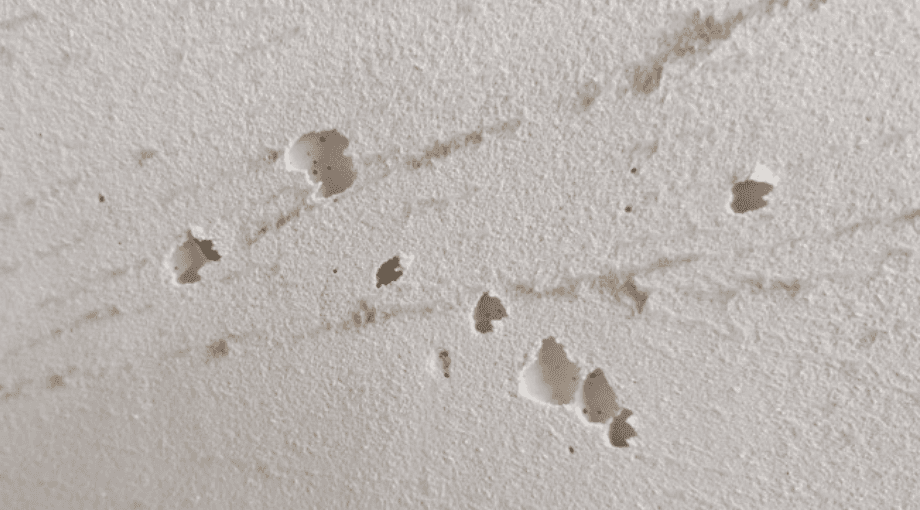
Voids have been a persistent challenge in the wallboard industry for decades. As product formulations have evolved and production line speeds have increased, void formation within the board core has intensified, forcing manufacturers to rely more heavily on manual inspections. The industry now needs a more effective approach to detect and prevent voids—one that reduces waste and eliminates customer complaints.
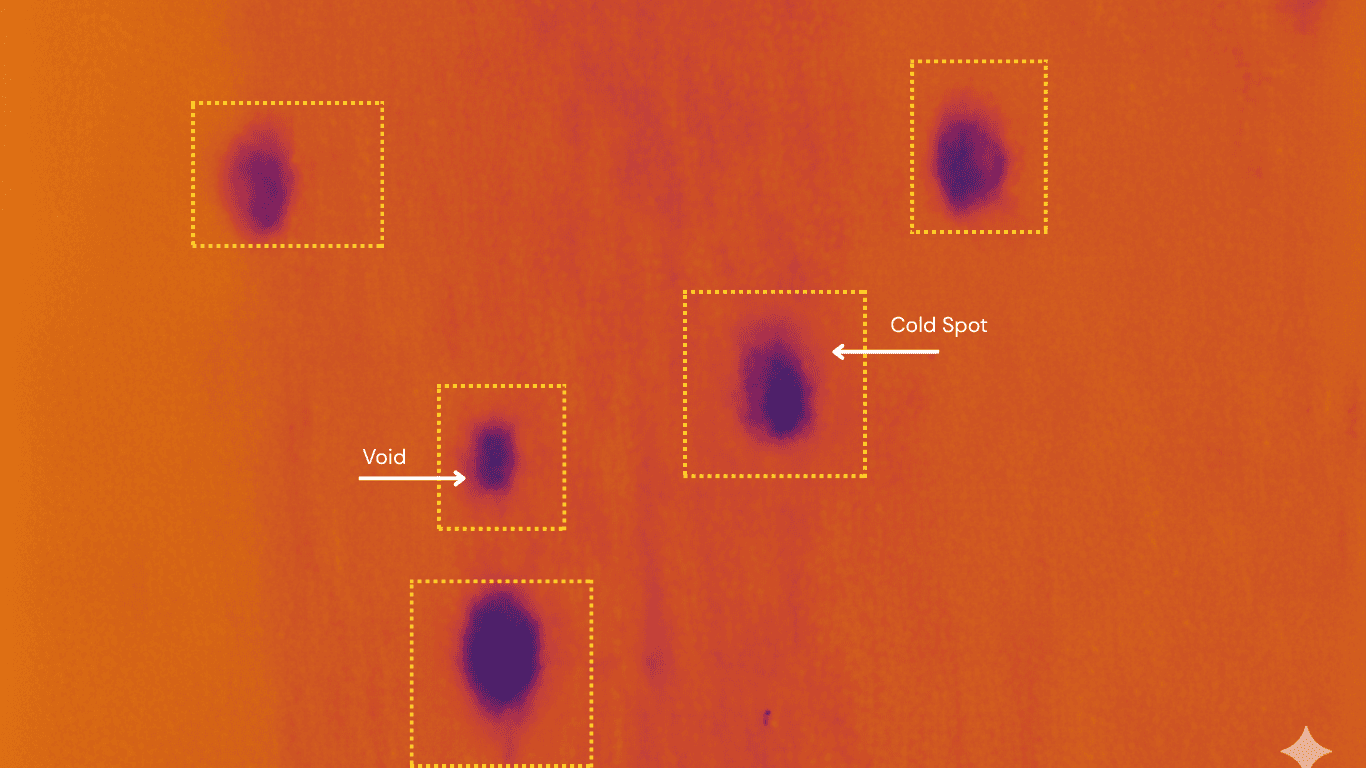
Gyptech's void detection system, powered by Eigen's Thermal AI, monitors the board post-board formation and before the knife using thermal cameras and machine learning. It classifies voids, alerts operators for critical issues, and delivers daily quality reports so plants can improve quality while running lines at higher speeds.
What the system monitors and reports
Void detection and classification
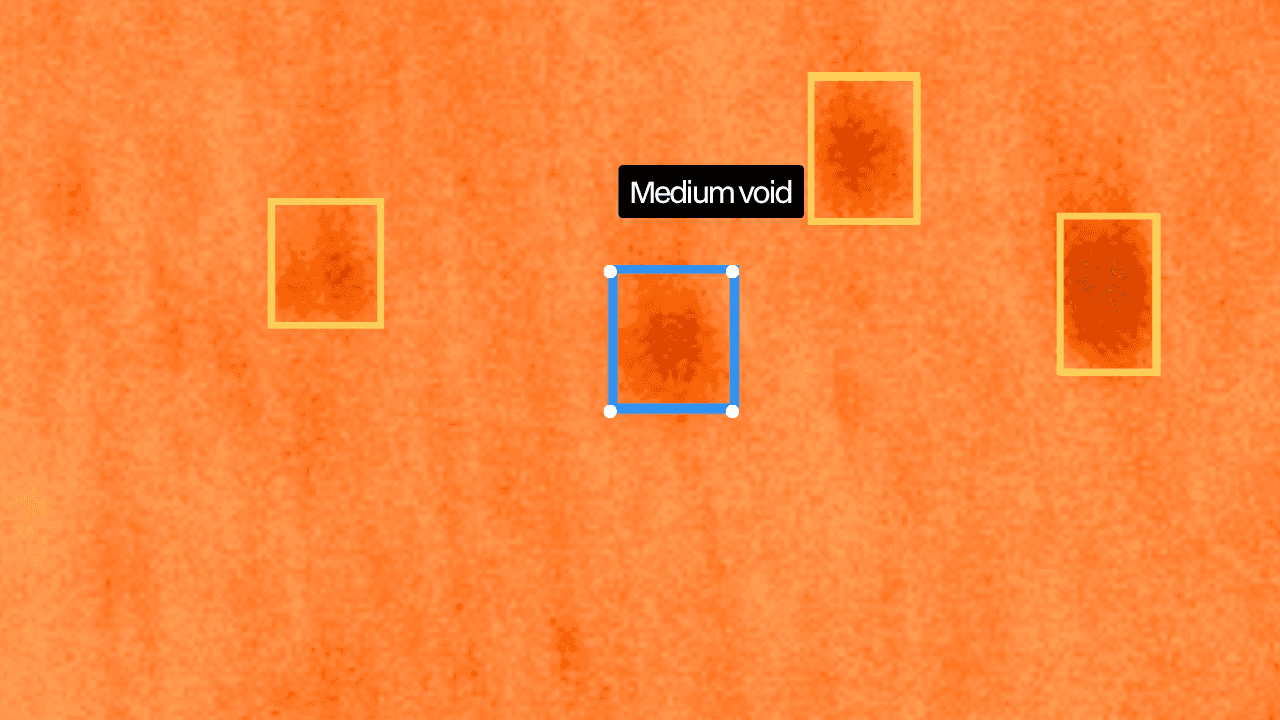
AI classifies every void as small, medium, or large. No more binary pass/fail alerts.
Daily trending reports
Quality and operations teams receive daily email reports showing void density per 1,000 square feet, broken down by size and severity. Critical events link to Eigen's OneView cloud platform for deeper investigation.
Severity-based alarms
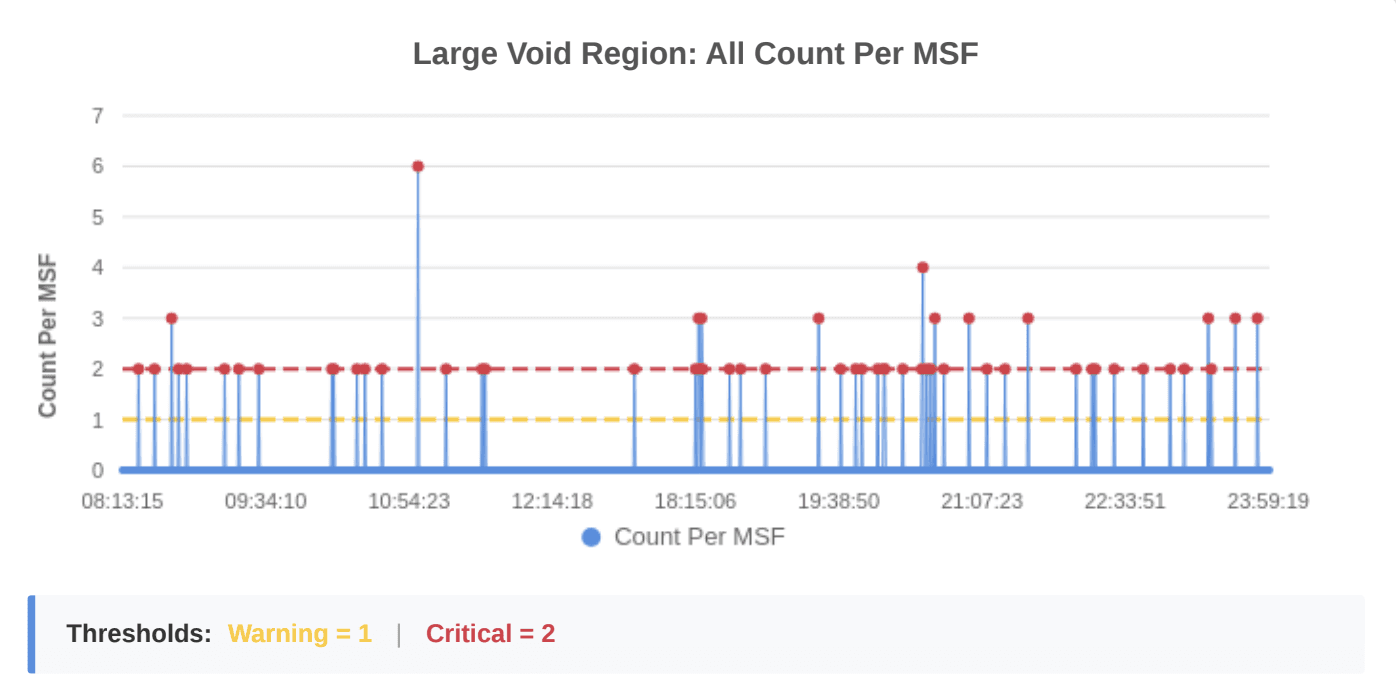
Configurable warning and critical thresholds are programmed into the local PLC. Operators get actionable alerts, not noise.
Live thermal stream
An interactive HMI before the knife shows real-time thermal imagery of the board with void overlays, so operators see what's happening as it happens.
Product-level quality analysis
All inspection data can be filtered by product type to identify which SKUs are producing more voids and why.
Automatic SKU adaptation
The system pulls part width and product type from the PLC and automatically adjusts detection models when operators switch SKUs. No manual reconfiguration.
Installation and ROI
Fits any wallboard line, regardless of OEM
Two to three thermal cameras mount on a structure that fits over an existing open roller conveyor, before the knife. An edge device in a cabinet processes the thermal data and runs Eigen's machine learning models. The standard system includes an HMI before the knife; an optional second monitor can be added upstream near the slurry station.
Gyptech handles the implementation into your facility, and the system works on any wallboard line, regardless of OEM.
Machine learning that adapts to each SKU
Unlike rules-based systems that require manual threshold updates for each SKU, Eigen's models are trained at the product level and continuously refined using production data. The system also detects cold spots, temperature differences, and soft lumps — not just voids.
Reduces claims, increases throughput, improves process control
Cost of quality: Fewer voids means less board waste, better plant operations, and reduced product complaints.
Throughput: Plants that slow their lines to limit void risk can run faster with real-time monitoring. The system provides the visibility to push line speed while keeping voids in check.
Process optimization: Daily trending turns void detection from a reactive exercise into a process improvement tool. Quality leads can see how formulation changes, speed adjustments, and SKU transitions affect void rates over time.
See the system work on your line
Reach out to our team to learn more and to schedule an on-site demo. During the demo, our engineers set up the system on your line so you can see the results in real time.
Prevent process issues by catching voids early
Voids have been a persistent challenge in the wallboard industry for decades. As product formulations have evolved and production line speeds have increased, void formation within the board core has intensified, forcing manufacturers to rely more heavily on manual inspections. The industry now needs a more effective approach to detect and prevent voids—one that reduces waste and eliminates customer complaints.
Gyptech's void detection system, powered by Eigen's Thermal AI, monitors the board post-board formation and before the knife using thermal cameras and machine learning. It classifies voids, alerts operators for critical issues, and delivers daily quality reports so plants can improve quality while running lines at higher speeds.
What the system monitors and reports
Void detection and classification
AI classifies every void as small, medium, or large. No more binary pass/fail alerts.
Daily trending reports
Quality and operations teams receive daily email reports showing void density per 1,000 square feet, broken down by size and severity. Critical events link to Eigen's OneView cloud platform for deeper investigation.
Severity-based alarms
Configurable warning and critical thresholds are programmed into the local PLC. Operators get actionable alerts, not noise.
Live thermal stream
An interactive HMI before the knife shows real-time thermal imagery of the board with void overlays, so operators see what's happening as it happens.
Product-level quality analysis
All inspection data can be filtered by product type to identify which SKUs are producing more voids and why.
Automatic SKU adaptation
The system pulls part width and product type from the PLC and automatically adjusts detection models when operators switch SKUs. No manual reconfiguration.
Installation and ROI
Fits any wallboard line, regardless of OEM
Two to three thermal cameras mount on a structure that fits over an existing open roller conveyor, before the knife. An edge device in a cabinet processes the thermal data and runs Eigen's machine learning models. The standard system includes an HMI before the knife; an optional second monitor can be added upstream near the slurry station.
Gyptech handles the implementation into your facility, and the system works on any wallboard line, regardless of OEM.
Machine learning that adapts to each SKU
Unlike rules-based systems that require manual threshold updates for each SKU, Eigen's models are trained at the product level and continuously refined using production data. The system also detects cold spots, temperature differences, and soft lumps — not just voids.
Reduces claims, increases throughput, improves process control
Cost of quality: Fewer voids means less board waste, better plant operations, and reduced product complaints.
Throughput: Plants that slow their lines to limit void risk can run faster with real-time monitoring. The system provides the visibility to push line speed while keeping voids in check.
Process optimization: Daily trending turns void detection from a reactive exercise into a process improvement tool. Quality leads can see how formulation changes, speed adjustments, and SKU transitions affect void rates over time.
See the system work on your line
Reach out to our team to learn more and to schedule an on-site demo. During the demo, our engineers set up the system on your line so you can see the results in real time.
Read more
Previous
Solutions |
Metals
Fill Level Monitoring
Next
Solutions |
Building Materials
Plastic Extrusion

Void Detection for the Wallboard Industry
Building Materials
Detect, classify, and trend voids in real time. Delivered by Gyptech and powered by Eigen's Thermal AI.
Download
Sheet
Solution
Void Detection for the Wallboard Industry