
Food
Cracker Baking & Moisture Optimization
Optimize cracker yield, support consistent finished moisture and crispness, and detect uneven baking across the conveyor with Eigen thermal inspection.
A consistent cracker starts with a consistent bake
Your line needs to reach the right finished moisture without baking away more weight than necessary. It also needs to deliver that result across the full conveyor, from the outer lanes to the center.
Thermal Intelligence by Eigen shows how product surface temperatures vary across the belt and over time. Use that visibility alongside finished-moisture and texture checks to identify process drift, investigate uneven baking, and make better decisions about heat input and line speed.
Protect yield without compromising the crunch
Every bit of moisture removed beyond your finished-product target is unnecessary weight loss. Extra bake time can also use more energy and limit throughput.
Track thermal changes as the line runs and compare them with finished-moisture and weight results. Identify opportunities to adjust heat input or belt speed while maintaining the moisture range and texture your product requires. Optimize toward the specification, with less unnecessary overbaking.

Keep finished moisture and crispness consistent
Finished moisture is a key part of the texture customers expect. Routine samples tell you about the crackers you tested; thermal monitoring helps show when and where the process has changed between those checks.
Flag unusual thermal patterns and direct samples to the affected time window or belt lane. Compare those patterns with moisture and texture measurements to establish which signals are useful for your recipe and process. This gives quality and production teams a clearer basis for investigating drift and keeping the finished cracker consistent.

See the difference between belt edges and center
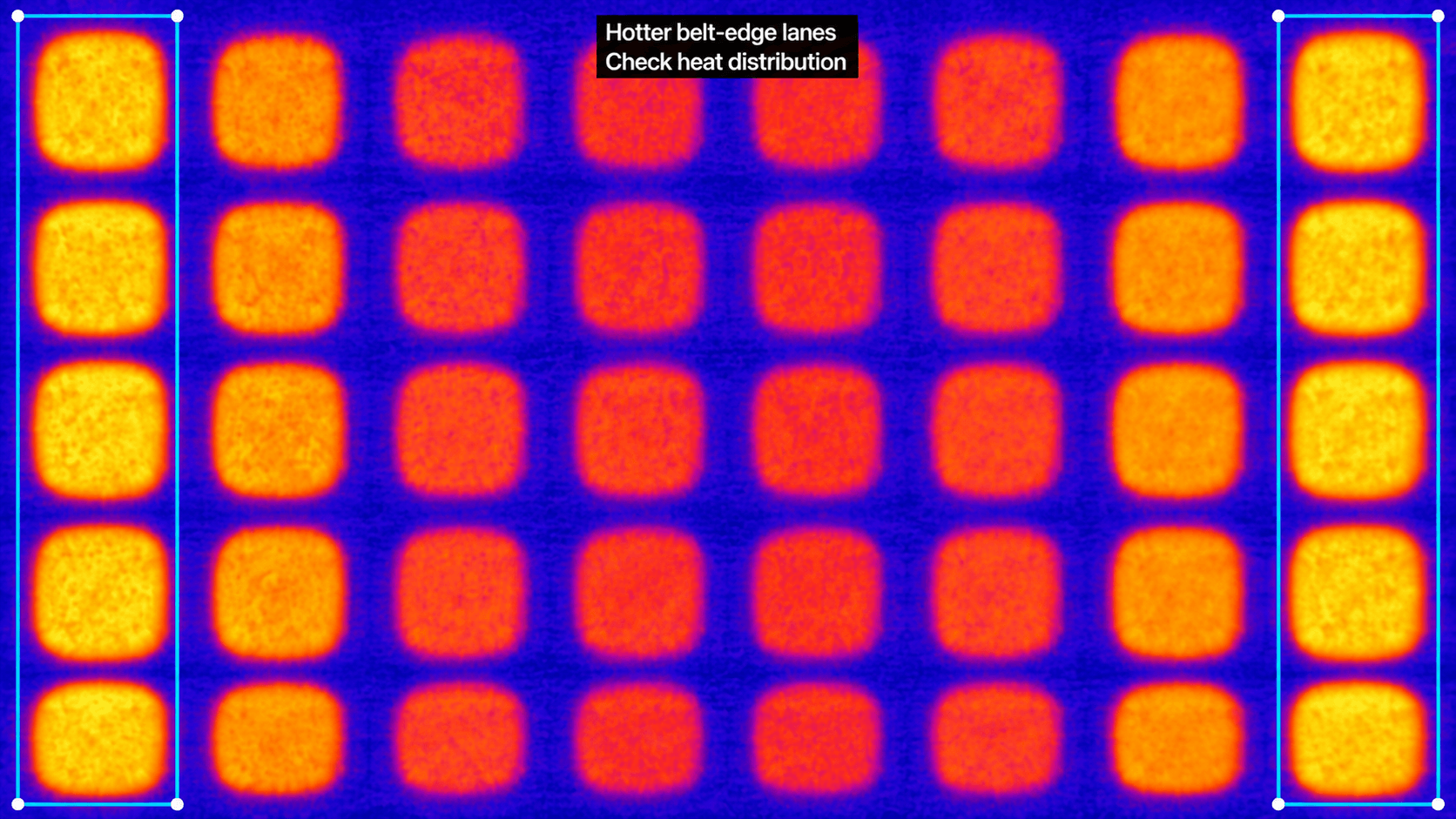
A good average can hide an uneven bake. Crackers in the outer lanes may experience different conditions from those traveling through the center of the conveyor.
Compare thermal profiles across the full belt width to reveal hotter edges, cooler center lanes, or one-sided variation. Help operators locate where to sample and investigate heat distribution, airflow, or loading. Track the pattern after an adjustment to see whether the line is becoming more uniform.
Turn thermal variation into a useful signal
Define the expected thermal profile for each product and alert operators when conditions move outside the agreed range. Use OneView inspection records and trends to review changes across runs and investigate quality events.
Thermal cameras measure surface temperature. Relationships to finished moisture and crispness are established using your product tests, so alerts support the decisions and checks already used on your line.
Built around your cracker process
Eigen configures inspection around your conveyor width, product presentation, and the stage where thermal information is most useful. At the oven exit, coverage across the belt can show variation that individual spot checks miss.
Bring your target moisture range, current bake settings, and quality data. Eigen works with your team to identify meaningful thermal signals and define the operator actions they should trigger.
Find the right bake across your whole belt
Talk to Eigen about yield, finished moisture, and the difference between your center and edge lanes. We’ll help identify where continuous thermal monitoring can support a more consistent cracker.
A consistent cracker starts with a consistent bake
Your line needs to reach the right finished moisture without baking away more weight than necessary. It also needs to deliver that result across the full conveyor, from the outer lanes to the center.
Thermal Intelligence by Eigen shows how product surface temperatures vary across the belt and over time. Use that visibility alongside finished-moisture and texture checks to identify process drift, investigate uneven baking, and make better decisions about heat input and line speed.
Protect yield without compromising the crunch
Every bit of moisture removed beyond your finished-product target is unnecessary weight loss. Extra bake time can also use more energy and limit throughput.
Track thermal changes as the line runs and compare them with finished-moisture and weight results. Identify opportunities to adjust heat input or belt speed while maintaining the moisture range and texture your product requires. Optimize toward the specification, with less unnecessary overbaking.
Keep finished moisture and crispness consistent
Finished moisture is a key part of the texture customers expect. Routine samples tell you about the crackers you tested; thermal monitoring helps show when and where the process has changed between those checks.
Flag unusual thermal patterns and direct samples to the affected time window or belt lane. Compare those patterns with moisture and texture measurements to establish which signals are useful for your recipe and process. This gives quality and production teams a clearer basis for investigating drift and keeping the finished cracker consistent.
See the difference between belt edges and center
A good average can hide an uneven bake. Crackers in the outer lanes may experience different conditions from those traveling through the center of the conveyor.
Compare thermal profiles across the full belt width to reveal hotter edges, cooler center lanes, or one-sided variation. Help operators locate where to sample and investigate heat distribution, airflow, or loading. Track the pattern after an adjustment to see whether the line is becoming more uniform.
Turn thermal variation into a useful signal
Define the expected thermal profile for each product and alert operators when conditions move outside the agreed range. Use OneView inspection records and trends to review changes across runs and investigate quality events.
Thermal cameras measure surface temperature. Relationships to finished moisture and crispness are established using your product tests, so alerts support the decisions and checks already used on your line.
Built around your cracker process
Eigen configures inspection around your conveyor width, product presentation, and the stage where thermal information is most useful. At the oven exit, coverage across the belt can show variation that individual spot checks miss.
Bring your target moisture range, current bake settings, and quality data. Eigen works with your team to identify meaningful thermal signals and define the operator actions they should trigger.
Find the right bake across your whole belt
Talk to Eigen about yield, finished moisture, and the difference between your center and edge lanes. We’ll help identify where continuous thermal monitoring can support a more consistent cracker.
Read more
Next

Solutions |
Food
Bread Baking & Cooling Optimization

Cracker Baking & Moisture Optimization
Food
Optimize cracker yield, support consistent finished moisture and crispness, and detect uneven baking across the conveyor with Eigen thermal inspection.
Download
Sheet
Solution
Cracker Baking & Moisture Optimization