The quality function in manufacturing is undergoing a fundamental shift. For decades, the paradigm was straightforward: inspect parts, sort good from bad, ship the good ones. That model is breaking down, not because it's wrong, but because it's no longer sufficient.
The Economics Have Changed
The cost of quality failures has escalated dramatically. The average cost of a product recall in manufacturing now exceeds $10 million, with automotive and aerospace recalls routinely reaching hundreds of millions (ASQ, 2024). Meanwhile, product complexity has increased. Modern manufactured goods contain dozens of process-critical interfaces where failure modes are subtle and inspection-resistant.
The traditional response was more inspection. But this approach has diminishing returns. Companies with the highest inspection intensity don't necessarily have the lowest defect rates (McKinsey, 2024). The correlation breaks down because inspection catches defects after they occur. It doesn't prevent them.
Why Pass/Fail Isn't Enough
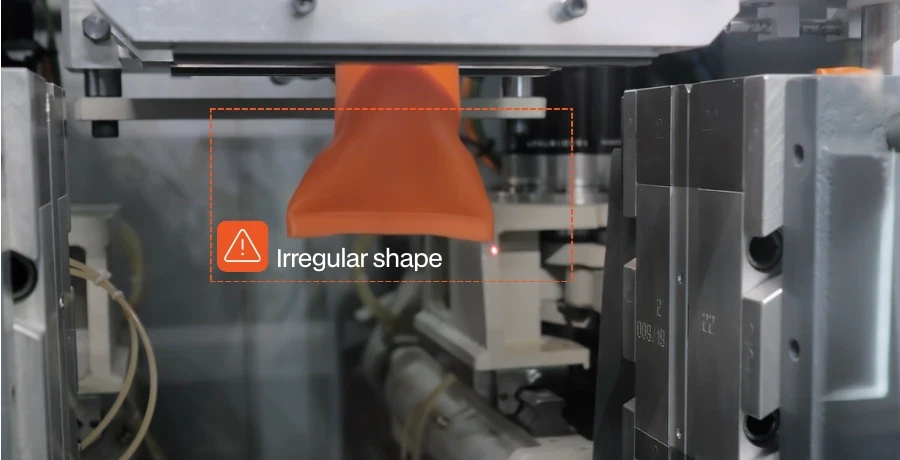
The fundamental limitation of pass/fail inspection is that it discards information. When you reduce a complex process output to a binary decision, you lose the ability to understand what's actually happening.
Quality is a distribution, not a threshold. Parts at the edge of specification today become field failures tomorrow. Research shows that 68% of warranty claims trace back to parts that passed all inspections. They were within spec, but barely (Journal of Manufacturing Systems, 2023).
Process drift is invisible. Manufacturing processes don't fail suddenly. They drift. Equipment wears. Material properties vary. If you're only measuring pass/fail, you won't see the drift until it crosses your threshold, by which point you may have produced thousands of marginal parts.
The Shift to Process-Centric Quality
Leading manufacturers are moving from "inspect the output" to "understand the process." Manufacturers with mature process monitoring capabilities have 34% lower cost of quality compared to those relying primarily on end-of-line inspection (LNS Research, 2024).
This shift requires different data: measurements that capture what's happening during manufacturing, not just afterward.
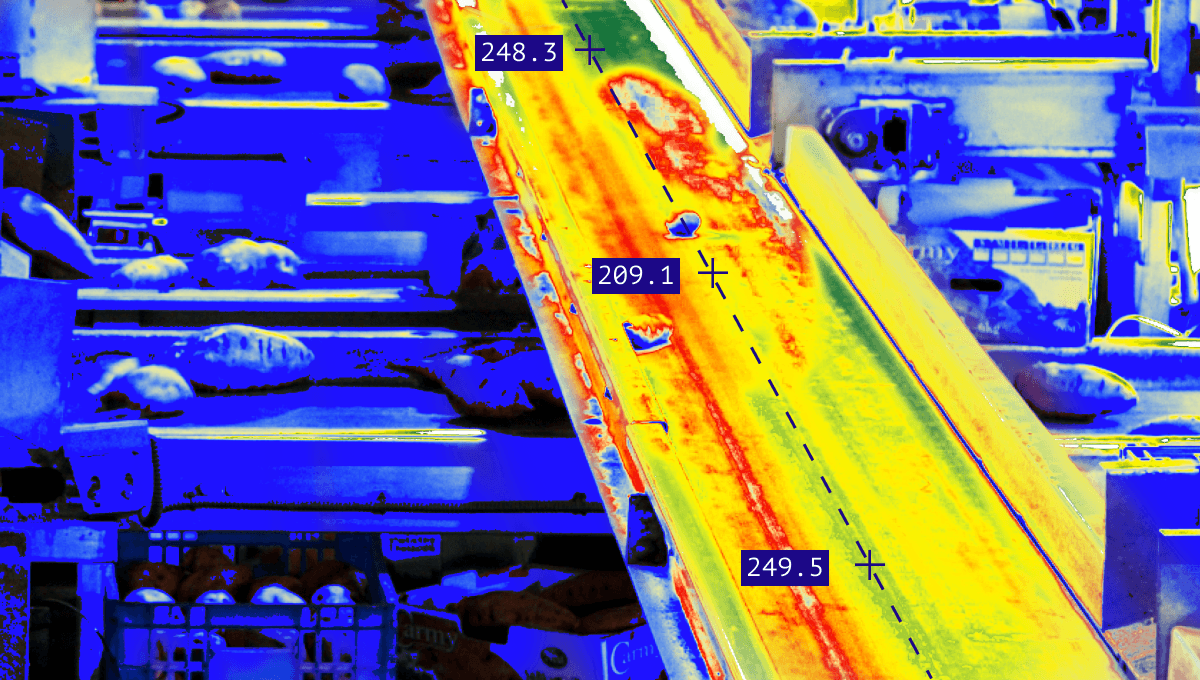
Thermal data has emerged as particularly valuable. Temperature affects material behavior, chemical reactions, adhesive curing, welding, and molding. Thermal signatures correlate with final part quality more reliably than post-process inspection for 73% of joining and curing processes examined in recent studies (Fraunhofer Institute, 2024).
The practical advantage is that thermal monitoring measures the process directly. A thermal camera watching an adhesive cure can detect whether the exothermic reaction happened correctly, whether heat distribution was uniform, and whether cure completed properly. All in real time, on every part.
Where AI Fits
The challenge with process data is volume. A single thermal camera generates gigabytes per shift. This is where machine learning becomes practical.
AI systems can establish normal patterns, flagging deviations before they become defects. They find correlations humans miss. In one automotive case, a model discovered that ambient humidity in a specific production zone correlated with adhesive failures six months later (Deloitte, 2024). And they enable 100% process monitoring, since running inference on every part costs essentially nothing once trained.
Manufacturers using AI-driven quality systems report a 35% reduction in defect rates and 25% decrease in quality-related costs within 18 months of implementation (Capgemini, 2024).
The Path Forward
Quality in 2026 isn't about finding better ways to sort good parts from bad. It's about understanding your process well enough that you stop making bad parts in the first place.
The pattern that works: capture process signatures (not just final-part measurements), build models connecting process behavior to outcomes, monitor continuously, and act on early indicators rather than waiting for failures.
This is the approach Eigen Innovations has built its platform around. By combining thermal imaging with AI-driven analytics, Eigen helps manufacturers see inside their processes and catch quality issues at the source, before they become defects or field failures. The result is fewer escapes, lower cost of quality, and the kind of process understanding that traditional inspection simply cannot provide.
The companies still relying primarily on end-of-line inspection are increasingly at a disadvantage. They're making decisions with less information, catching problems later, and spending more to maintain the same quality levels. Process insight is becoming the foundation of competitive quality performance. The question for manufacturers is how quickly they can get there.