A new AI-powered thermal inspection system from Eigen Innovations is giving blow molding operations real-time visibility into parison quality, catching process issues that may not be visible to the naked eye and often go undetected until scrap rates rise or downstream quality issues emerge.
The system uses multiple thermal cameras positioned around the parison to capture a complete thermal profile of every shot as it forms. AI models analyze each image in under one second, identifying deviations in shape, length, temperature distribution, and die condition without adding to cycle time.
Targeting the root cause of scrap
In extrusion blow molding, variations in the parison are often the root cause of quality problems in the finished part or bottle. Inconsistent melt temperature, die wear, poor cutoff, and mechanical drift during mold changes all show up in the parison before they show up in the product. Yet most plants have no continuous monitoring at this stage of the process, relying instead on operator experience to observe changes.
"A challenge in blow molding has always been that you can't see changes in part uniformity as it extends," said James Finch, COO at Eigen Innovations. "Operators can spot obvious issues visually, but temperature gradients, subtle asymmetry, thickness variation and material contamination go undetected until they become scrap and cause downtime to correct."
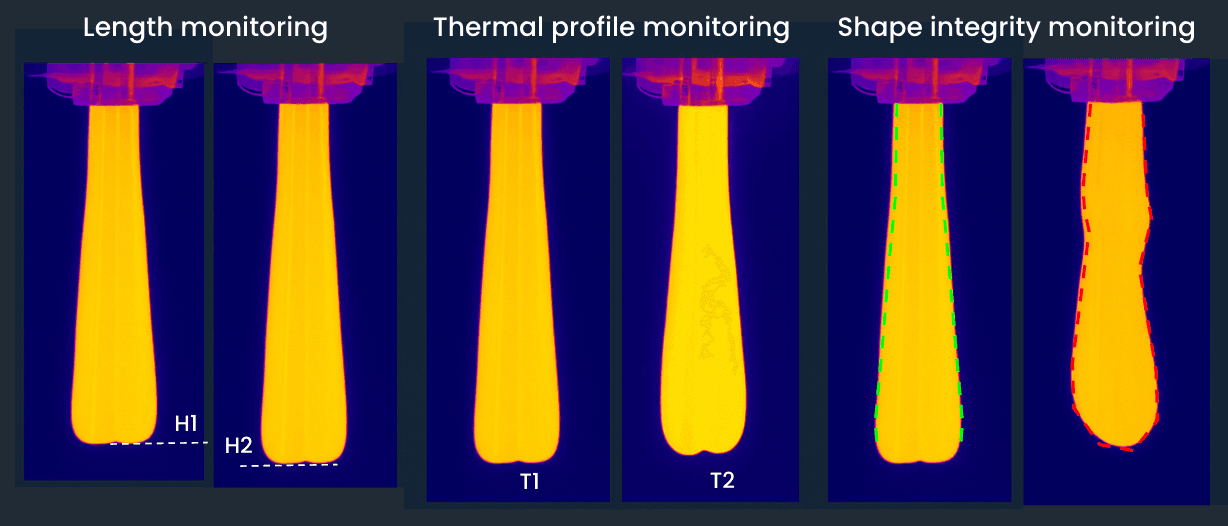
The system monitors four key areas:
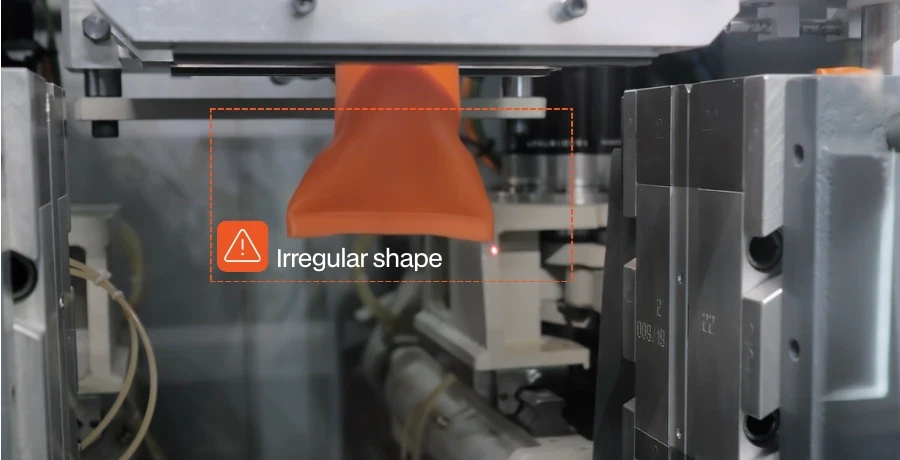
Shape and integrity analysis to detect sagging, stretching, and swing misalignment.
Parison length consistency to catch premature cutoff.
Thermal profile mapping to identify cold spots, uniformity, and contamination.
Spill and die monitoring for early detection of die wear.
Biggest impact at mold changeover
According to Eigen, mold changeover and varying part weights is where the system delivers the most immediate value. Operations teams typically rely on technician experience to optimize parison settings via trial and error, a time-consuming approach that generates scrap and downtime. With continuous thermal visibility, operators can see in real time whether the parison profile matches the target, reducing both setup time and startup waste.
The system is also proving valuable for large-format packaging such as IBCs, drums, and jerry cans, where parison thickness and distribution are critical. Several packaging manufacturers are adopting the technology to reduce both scrap and unplanned downtime.
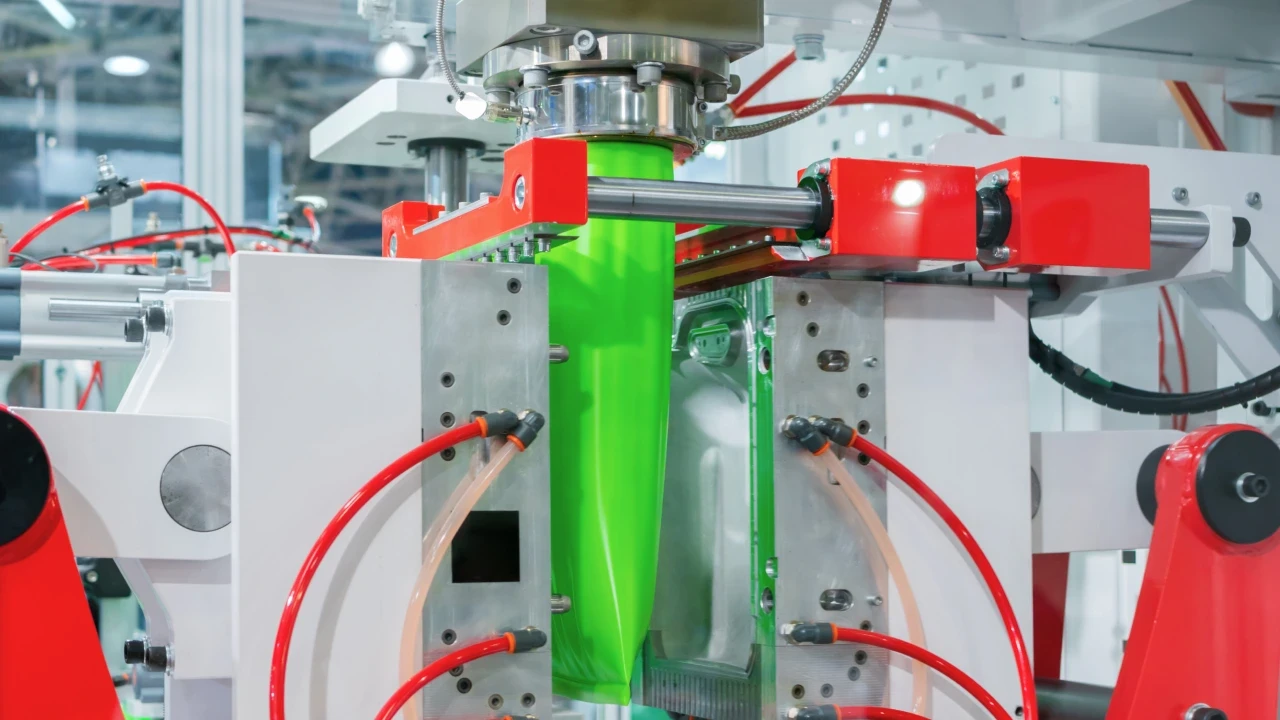
Designed for production environments
The hardware package includes three FLIR A50 or Optris Xi 400 thermal cameras, an industrial edge panel PC with built-in HMI, and OPC UA connectivity for PLC integration. Pre-built algorithms for blow molding ship with the system and are configured to the specific process during commissioning and model training.
See it on your line
Eigen offers on-site demonstrations where their team installs thermal cameras on your blow molding machine, collecting live process data to visualize variation in real-time.
It's a practical way to evaluate feasibility and quantify the potential value for your specific operation before committing to a full deployment. Request a demo at eigen.io/contact.